Issues and Approaches
Challenges Faced
The source does not directly state the customer's business pain points; the facts that can be confirmed from the report are: automotive factories have material handling task scenarios, and there had been no previously reported case of humanoid robots collaborating with autonomous logistics vehicles, autonomous forklifts, industrial mobile robots, and smart manufacturing management systems, requiring validation of this multi-robot collaboration model through training.
Solutions and Approaches
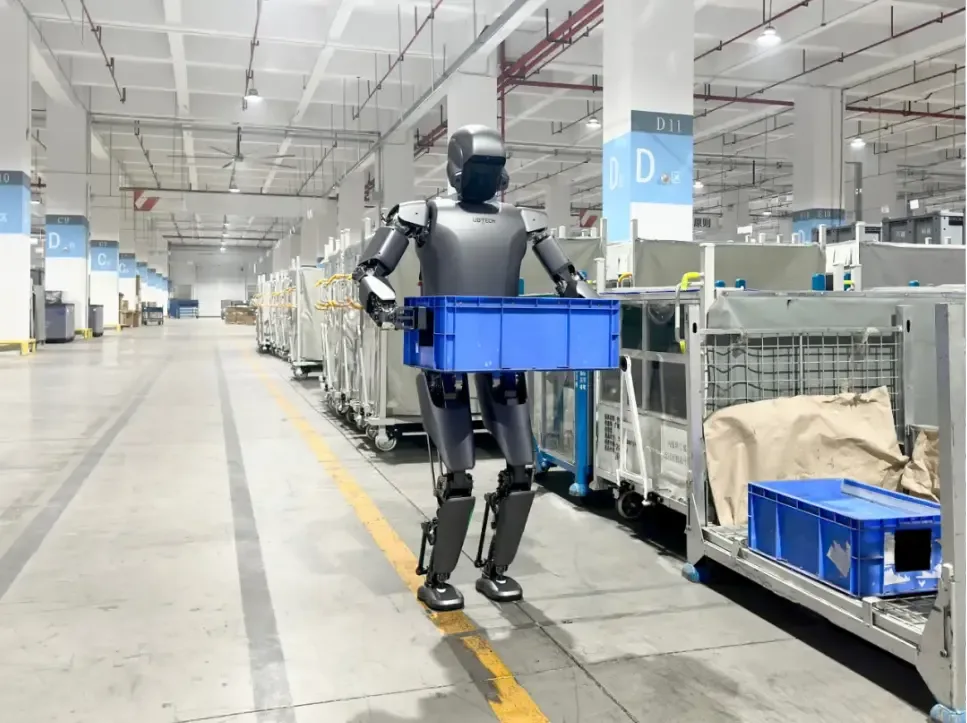
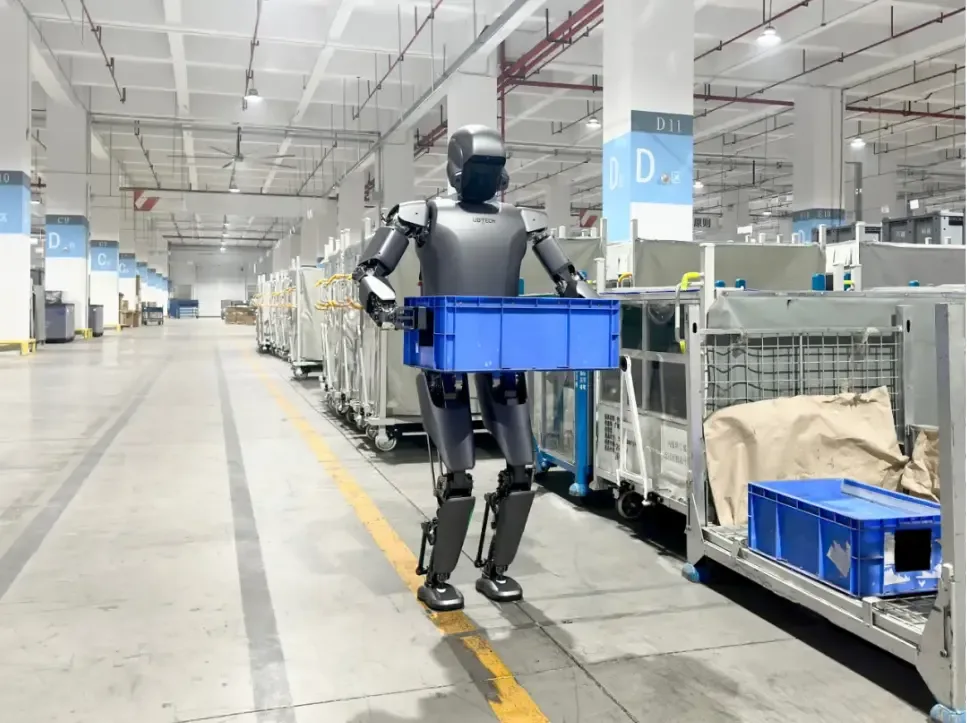
UBTech released the new-generation industrial humanoid robot Walker S1 and deployed it to a BYD factory for handling task training, achieving collaborative operation between the humanoid robot and autonomous logistics vehicles, autonomous forklifts, industrial mobile robots, and the smart manufacturing management system. Body capabilities: height 172cm, weight 76kg, payload walking 15kg; an integrated head design with binaural fisheye cameras and 3D stereo vision enables 360° multimodal perception; the integrated joints use innovative rotary drives with maximum torque of 250N·m; the humanoid dexterous hand is equipped with 6 array-based tactile pressure sensors and a full-stack dexterous manipulation strategy library. According to UBTech, it has partnered with multiple companies including Dongfeng Liuzhou Motor, Geely Auto, FAW Hongqi, FAW-Volkswagen Qingdao Branch, Audi FAW, Foxconn, and SF Express, and the Walker S series has entered training at multiple car factories.
Delivery results
Walker S1 has been performing handling task training at a BYD factory, achieving the world's first collaborative operation of a humanoid robot with autonomous logistics vehicles, autonomous forklifts, industrial mobile robots, and a smart manufacturing management system; as of the report, the Walker S series has become the humanoid robot that has entered training at the largest number of car factories worldwide. The report does not provide quantitative metrics such as efficiency or accuracy.
System Composition
Perception
Integrated head design, binaural fisheye cameras, 3D stereo vision
Body & Platform
Height 172cm, weight 76kg, payload walking 15kg, integrated joint rotary drive with maximum torque 250N·m
6 array-based tactile pressure sensors, full-stack dexterous manipulation strategy library
Business
Collaborates with autonomous logistics vehicles, autonomous forklifts, and industrial mobile robots to execute handling tasks
Implementation Checklist
- Confirm whether workstation payload requirements fall within Walker S1's 15kg payload walking capacity
- Confirm the collaboration interface plan with in-factory autonomous logistics vehicles, autonomous forklifts, industrial mobile robots, and the smart manufacturing management system
- Monitor progress and stability data from training to scaled delivery (there is a separate follow-up report on the site about expected scaled delivery in Q2, which needs further verification)
Editorial Analysis Inferred from source information
This solution is at the factory training stage rather than large-scale delivery. Choosing handling tasks as the entry point aligns with the body specifications given in the source — payload of 15kg and maximum joint torque of 250N·m — indicating it is first validated on tasks with clear load requirements, such as material transport between workstations. At the same time, the emphasis on collaboration with autonomous logistics vehicles, autonomous forklifts, industrial mobile robots, and the smart manufacturing management system shows the solution's focus is on embedding the humanoid robot into the factory's existing multi-robot logistics system rather than single-robot operation. The fact that multiple car factories are conducting training simultaneously reflects that automakers are generally in a pilot validation stage, but entering factory training does not equal procurement or volume deployment. Evaluating such solutions requires attention to whether the body's payload and torque match workstation requirements, the collaboration interfaces and integration approach with the in-factory manufacturing management system, and stability and efficiency data between training and scaled delivery.
- The report is media coverage of vendor announcements, with no third-party test data
- Training has no quantitative metrics such as efficiency or accuracy, making actual delivery performance impossible to assess
- The list of partner companies is as stated by UBTech; the depth of cooperation and whether procurement occurred are not specified
- The report date is 2024-10-15; subsequent developments are not included
- Customer pain points are an editorial inference based on facts; the source does not directly state the customer's business problems