Issues and Approaches
Challenges Faced
Industrial scenarios are complex, and the previously challenging areas are concentrated in production line control, equipment operations and maintenance, and production safety: line operations rely on manual supervision, non-destructive testing demands high sensitivity to micro-defects and missed detections, equipment such as high-temperature units and belt conveyors are difficult to monitor continuously, and safety risks like gas leaks require early identification. The source notes that “digitalization is the foundation of industrial intelligence, and digitalization of industrial scenarios is an ongoing process; more elements and higher-quality digitalization are still needed to further improve quality, reduce costs, and boost efficiency.”
Solutions and Approaches
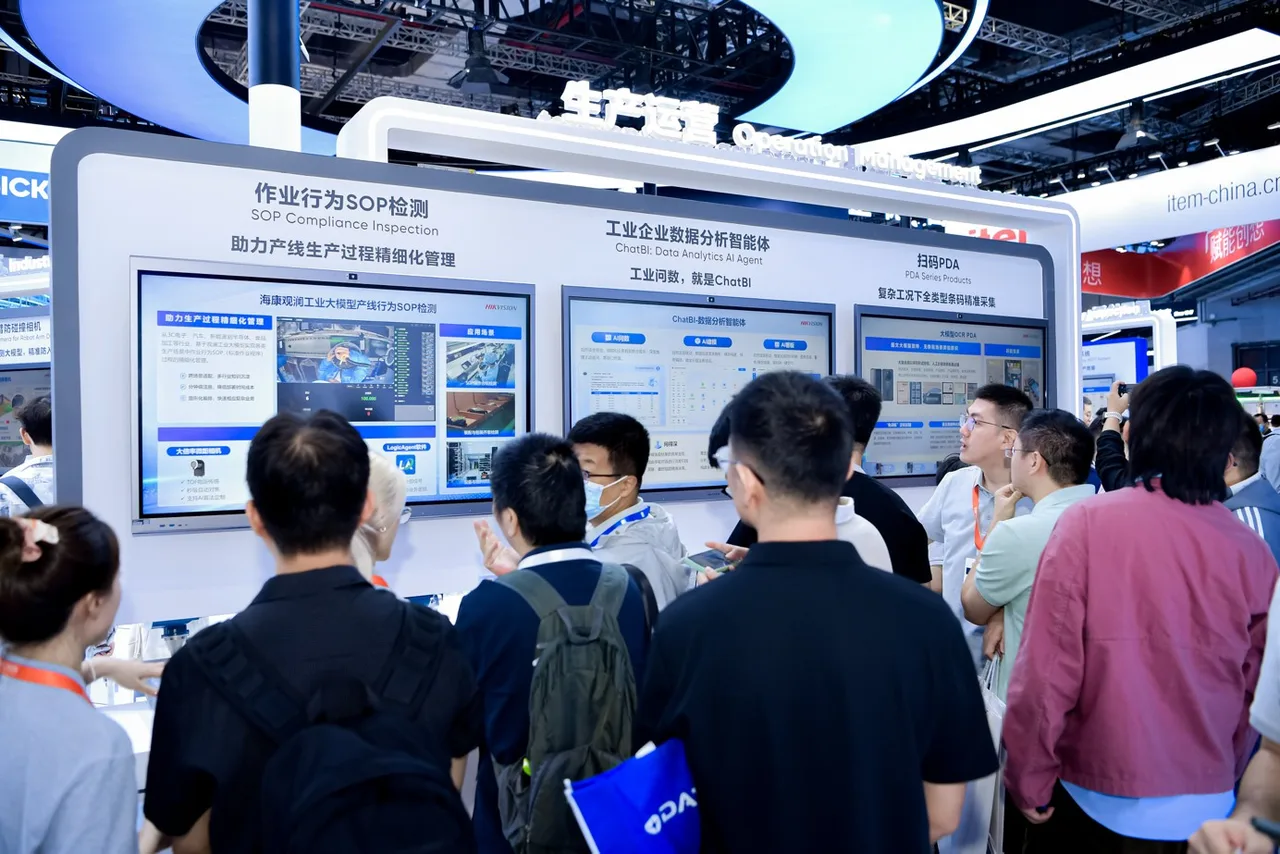
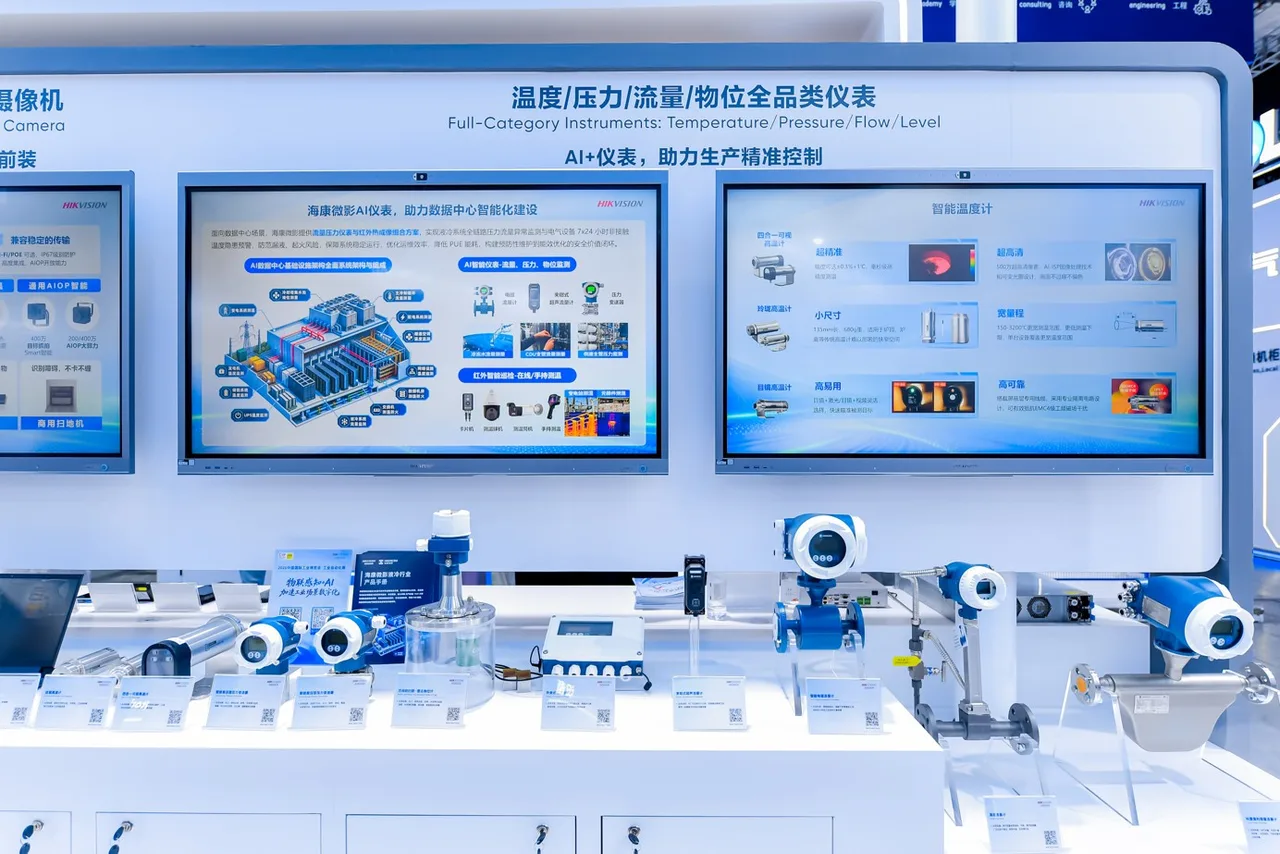
At the Industrial Automation Show (IAS 2026) of the China International Industry Fair in 2026, Hikvision presented more than 100 scenario-digitalization products targeting core processes such as quality inspection, equipment monitoring, production operations, and production safety, and launched over ten new products on site. On the technology side, it continues to expand sensing technologies including visible light, infrared, millimeter wave, X-ray, and acoustic wave, while deploying applications based on the Hikvision Guanlan large model: ① The large-model production line behavioral SOP inspection solution comes with out-of-the-box algorithms that display operations in real time, raise instant alarms on anomalies, and guide workers to make corrections; for new workpieces or new scenarios, only 1 to 8 images are needed to register and generate a new model, enabling minute-level deployment; ② Hikvision Ruiying released a high-precision semiconductor packaging 3D AXI inspection device and launched an ultrasonic non-destructive testing series based on an ultrasonic large model that performs AI modeling and classification of raw signals; ③ Location-based fiber-optic stethoscopes, equipped with an industrial stethoscopy large model, monitor belt idler status around the clock for 24 hours and precisely locate anomalies; ④ Hikvision Micro-Image's four-in-one HD visual pyrometer integrates high-precision temperature measurement with HD video; ⑤ A TDLAS gas cloud imaging telemetry device and a production safety large-model algorithm software containing over 70 algorithms with open interfaces provide micro-leak identification and system integration solutions for refining, chemical, and other industries.
Delivery results
Deployed results reported by the source: The large-model production line behavioral SOP inspection solution has been launched at more than 600 core workstations across Hikvision's three major production bases in Chongqing, Tonglu, and Wuhan, improving efficiency by up to 80% per workstation compared with the previous manual approach, and has entered Li Auto's supply chain system—at Jifeng Seating (Changzhou) Co., Ltd., the missed-staple rate for C-rings in seats dropped to as low as 0.01%; at powertrain supplier United Power, the solution covers 100% key operations. In new energy vehicle parts inspection, the ultrasonic non-destructive testing deployment achieved a defect recognition accuracy of no less than 99.5% and a missed detection rate of no higher than 0.5%. On the market side: cumulative shipments of Hikrobot vision products have exceeded 1000 units, and mobile robots shipped have surpassed 20 units; in the domestic market, one out of every two industrial cameras and one out of every three mobile robots comes from Hikrobot, with over 2 thousand customers served cumulatively across 1000 niche application scenarios. In 2025, Hikvision's smart manufacturing factory was selected into China's first batch of pioneering-level smart factory cultivation lists.
System Composition
Perception
Continuously expanding perception technologies including visible light, infrared, millimeter wave, X-ray, and acoustic waves
Core & Platform
According to official statements, it offers systematic advantages of being “versatile, fast, accurate, and cost-effective,” driving industrial digitalization to land in specific scenarios
Business
Comes with out-of-the-box algorithms, displays operations in real time, triggers instant alerts on anomalies and guides workers to correct them; 1 to 8 images are enough to register and generate a new model
Automatically identifies micro-defects inside chips, with detail resolution below 1 microns and geometric magnification of up to 2500x
Uses ultrasonic large models to perform AI modeling and classification of raw signals
An industry first, monitoring conveyor belt idler status around the clock for 24 hours and precisely locating anomalies
Deep fusion of high-precision temperature measurement and HD video, delivering clear site imagery even under extreme conditions of 3200℃
Contains over 70 algorithms with open interfaces, providing micro-leak identification and system integration solutions for refining and chemical industries
Implementation Checklist
- Confirm which link your scenario falls under: quality inspection, equipment monitoring, production operations, or production safety
- For production line SOP inspection, confirm whether your new-workpiece changeover frequency would benefit from the small-sample capability of registering a new model with 1 to 8 images
- For non-destructive testing, confirm whether your workpieces fall within the scope of semiconductor packaging (AXI) or new energy vehicle parts (ultrasonic)
- For equipment monitoring, confirm that specific conditions such as belt idlers and high-temperature measurement match the equipment's measurement range
- For the production safety module, assess your existing safety system interfaces and confirm the feasibility of integrating with the algorithm software
Editorial Analysis Inferred from source information
Based on the source, the logic of this solution portfolio's applicability lies in the following: sensing hardware (visible light, infrared, X-ray, ultrasonic, fiber-optic stethoscopy, TDLAS) captures high-quality on-site data, while the Guanlan large model handles small-sample adaptation and signal classification; once bound together, the two can be reused across different processes. For production line control needs, "only 1 to 8 images needed to register and generate a new model, with minute-level deployment" lowers the changeover threshold for new workpieces, making it suitable for high-mix, low-volume production lines. For inspection needs, the metrics of the AXI and ultrasonic solutions target semiconductor packaging and new energy vehicle parts, suiting scenarios with strict missed-detection constraints. The production safety module emphasizes open interfaces and system integration, making it suitable for incremental deployment by companies in refining, chemical, and other industries that already have safety systems in place.
- The performance data (efficiency gain of 80%, missed-staple rate of 0.01%, accuracy of 99.5%, etc.) comes from vendor claims in trade show coverage; no third-party measurement conditions or statistical definitions were provided
- Customer names (Jifeng Seating, United Power, Li Auto supply chain) are as relayed in the coverage; the depth of cooperation and contract scope are not stated in the source
- The claim "one out of every two industrial cameras and one out of every three mobile robots comes from Hikrobot" is the company's own market statement, lacking statistical agency sourcing
- Purchase models, pricing, and integration timelines for each solution are not given in the source