


01Event Overview
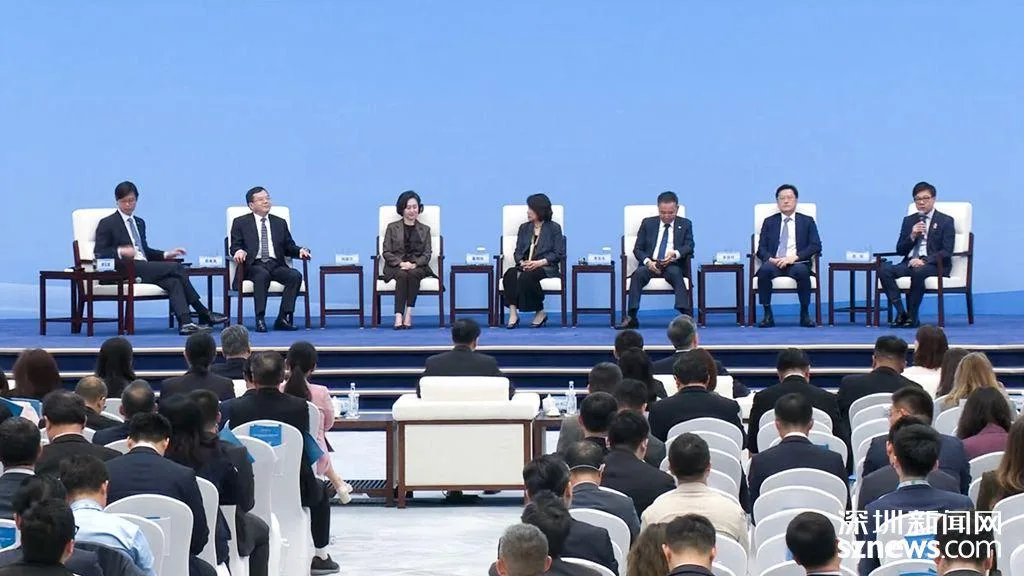
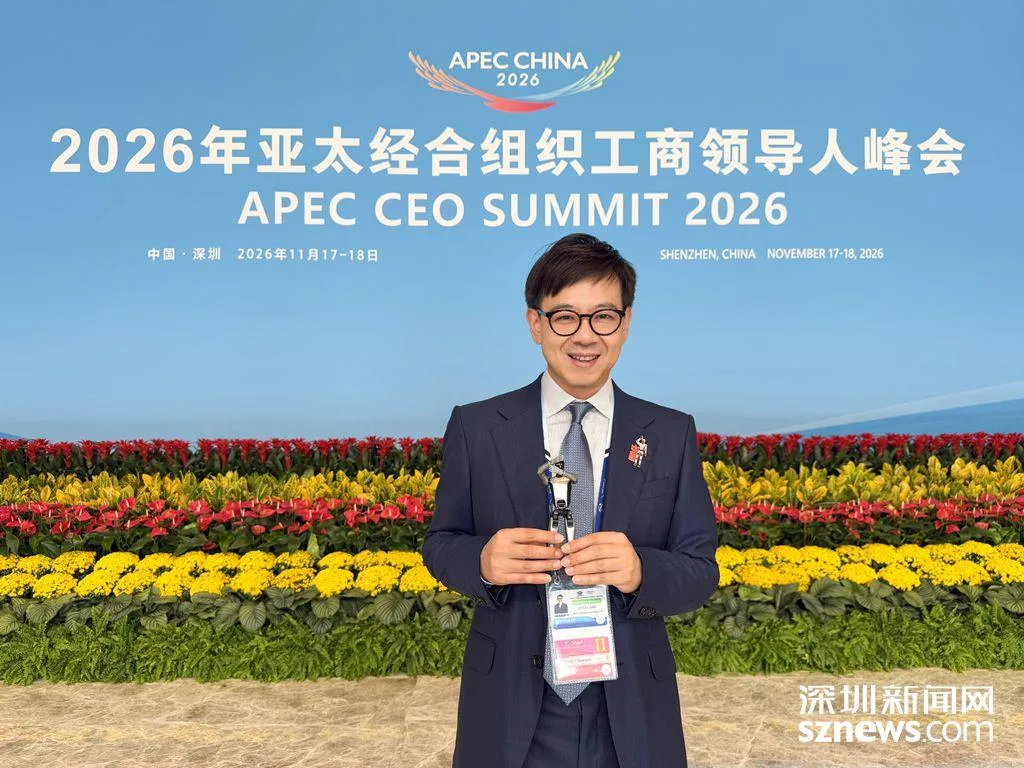
On 2026 11, 17, UBTECH founder Zhou Jian attended the APEC CEO Summit and participated in the panel discussion “Greater Bay Area and Asia-Pacific Development Opportunities.” At the same time, UBTECH's full lineup of humanoid robots was on display at the “Bay Area Reception Hall” in Qianhai and the Shenzhen Robot Valley, spanning three product lines: industrial manufacturing, commercial services, and home consumer.
02Industry Assessment and Strategy
Zhou Jian believes that breakthroughs in individual technologies are not difficult; what is scarce is a complete pipeline from technology to mass production and further conversion into usable productivity. The Greater Bay Area has a mature supply chain—core components can all be sourced in Shenzhen—and the synergy between Hong Kong's capital markets and scientific research supports rapid iteration.
He acknowledged that general-purpose humanoid robots still need time to develop, and that at this stage, scenario data and on-device understanding of real-world scenarios are more critical. UBTECH does not simply sell hardware; instead, it collaborates with local partners on scenario-specific secondary development, delivering integrated software-and-hardware solutions.
03Exhibited Products Highlights
| Model | Positioning and Key Features | |||
|---|---|---|---|---|
| U1 Pro | Hyper-bionic humanoid robot powered by the Resonance-LM emotional resonance large model, capable of recognizing over 20 fine-grained human emotions, demonstrated singing and voice conversation,Walker C1 | Full-size commercial service humanoid robot handling visitor reception at the exhibition venue,Walker S2 | World's first humanoid robot with autonomous battery swapping, built on the BrainNet 2.0 multi-brain network and Co-Agent intelligent agent technology, capable of 7×24-hour operation, deployed across five industries: aviation, automotive, 3C electronics, smart logistics, and semiconductors,Cruzr Y1 | Focused on palletizing and depalletizing, addressing pain points of traditional automation equipment such as poor adaptability and long changeover cycles |
04Livelihood Applications and Ethical Issues
Elderly care companionship and AI education are the livelihood directions emphasized in the report: UBTECH has partnered with Japanese and Singaporean counterparts to conduct elderly-care scenario secondary development and testing on hyper-bionic robots, and its AI robotics education solutions have been implemented in schools in South Korea, Singapore, Vietnam, and elsewhere. Zhou Jian identified cross-cultural scenario understanding and tech ethics as the two major barriers to large-scale deployment, noting that UBTECH released the world's first White Paper on Ethical Governance of Humanoid Robotics two months prior.
Editorial Analysis Inferred from source information
From the report, UBTECH's core message at APEC was about “pipeline competition” rather than single-point technology competition: Shenzhen's mature component supply chain addresses mass production and iteration speed, Hong Kong's capital markets address R&D investment, and localized secondary development addresses scenario adaptation. Walker S2's autonomous battery swapping and multi-brain network design point toward the usability of continuous industrial operation rather than showcase demonstrations; the Cruzr Y1, targeting long changeover cycles, indicates the company is betting on the adaptability shortcomings of traditional automation equipment in flexible manufacturing. The elderly care and education tracks address the structural needs of Asia-Pacific aging and labor shortages, representing a medium-to-long-term strategy. Overall, UBTECH takes a cautious stance on general-purpose humanoid robots and in the short term relies more on industry-specific customized solutions and a local partner ecosystem.
- This analysis is based on a single media report of panel remarks and exhibition demonstrations, lacking independent mass-production data, shipment figures, or customer contracts as corroboration.
- The on-site robot demonstrations were vendor-arranged showcases and do not represent stability and reliability in actual production environments.
- The projected industrial changes over the next 20 to 30 years are the speaker's predictive views and cannot be verified in the short term.
- The scope, scale, and progress of elderly care and education collaborations are only described qualitatively, with no quantitative information.